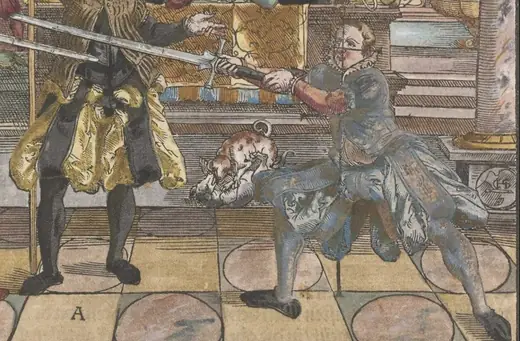
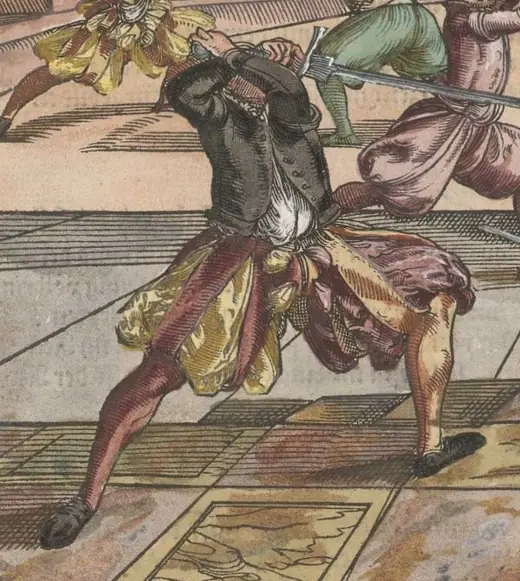
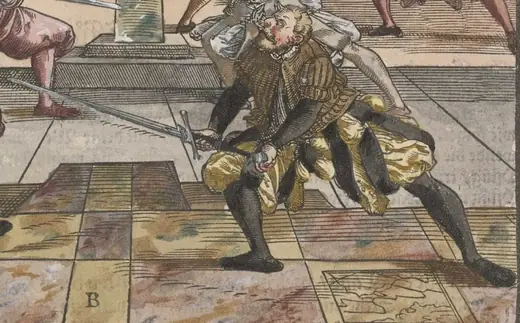
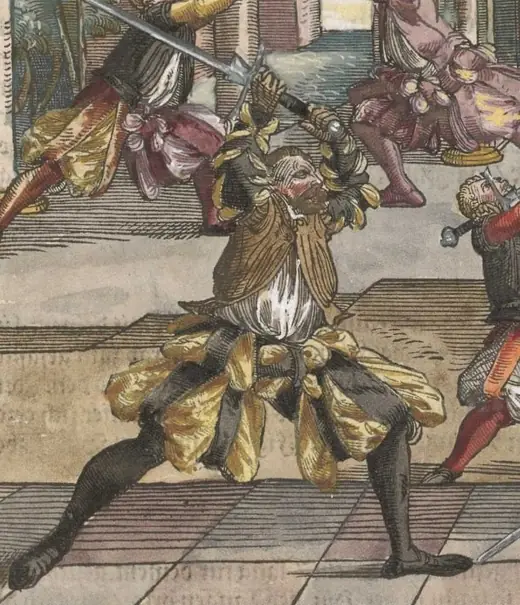
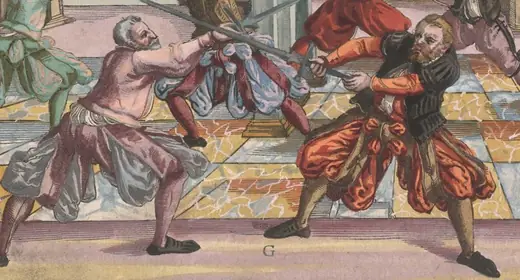
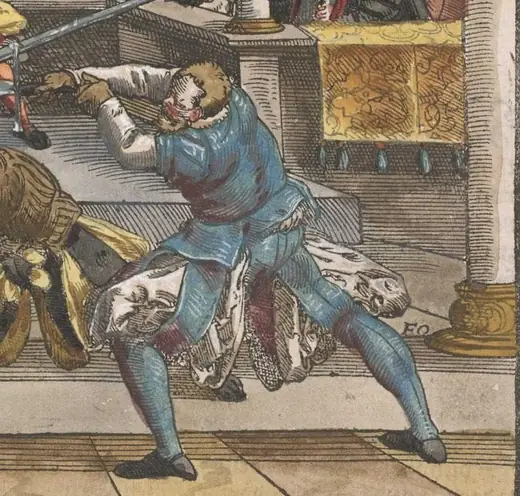
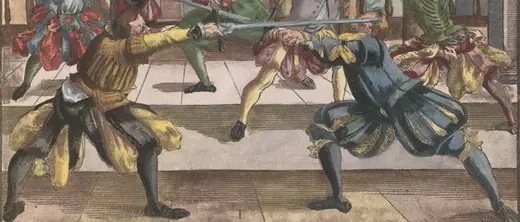
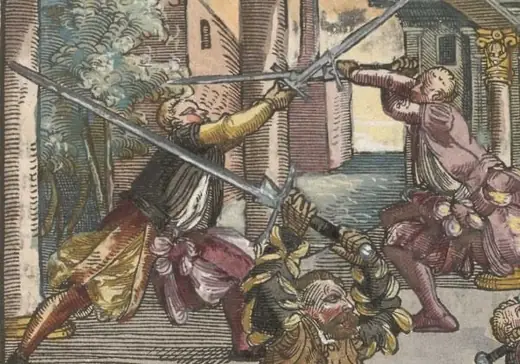
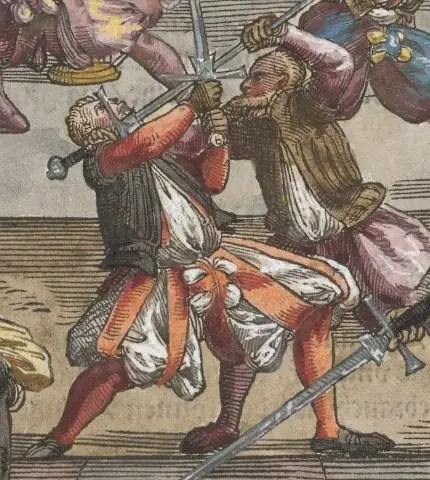
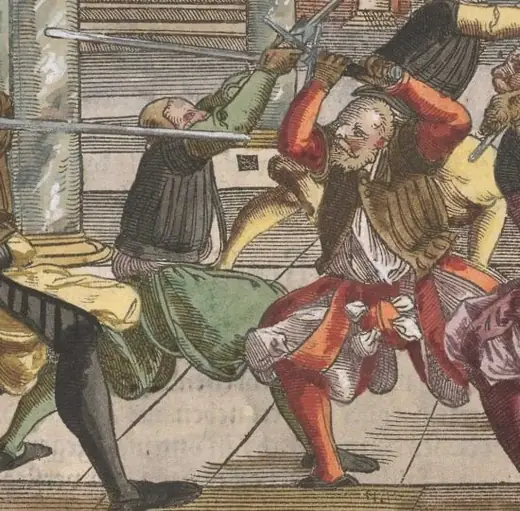
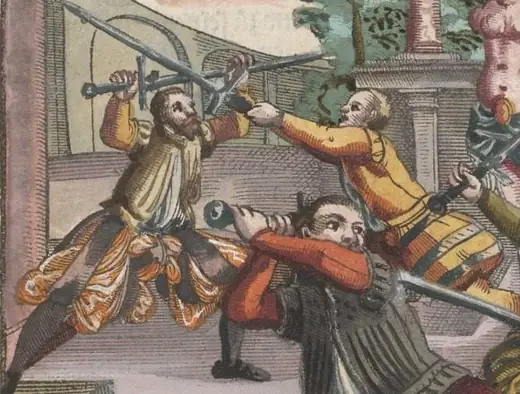
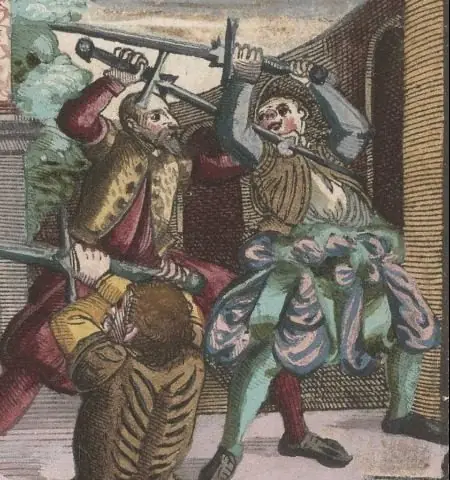
- Anbinden / Bleiben / Fühlen
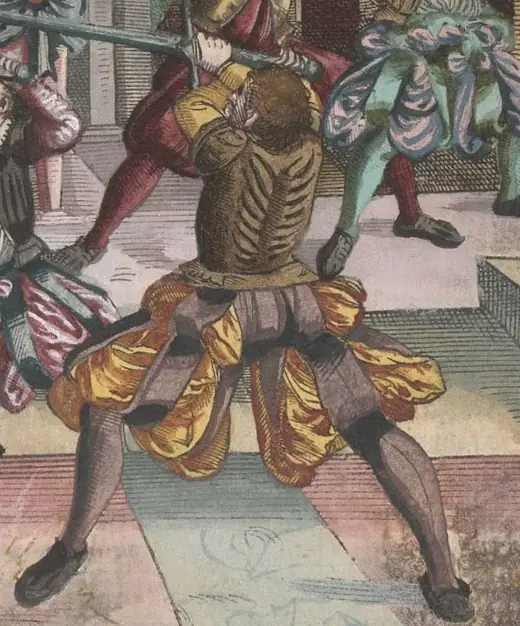
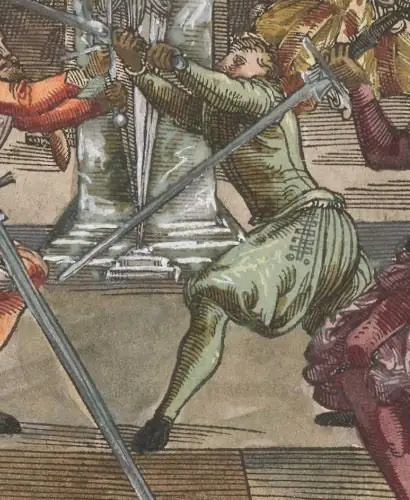
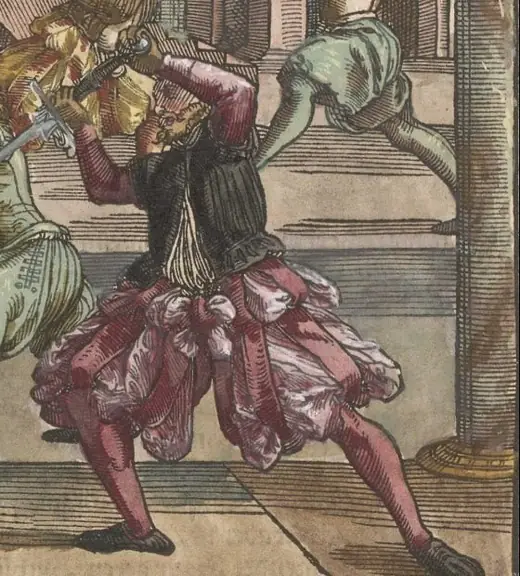
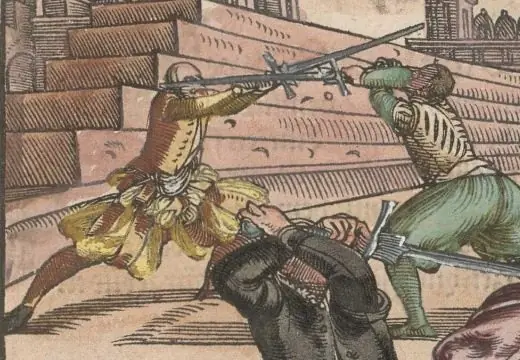
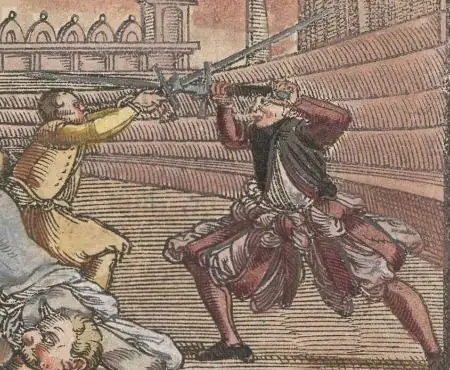
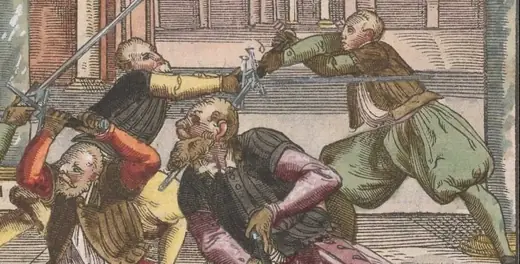
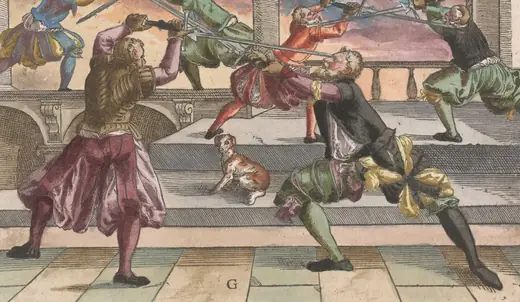
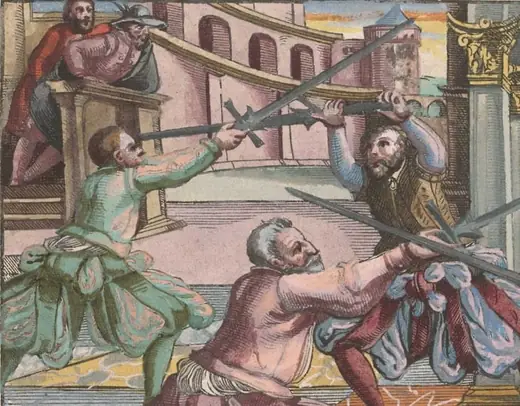
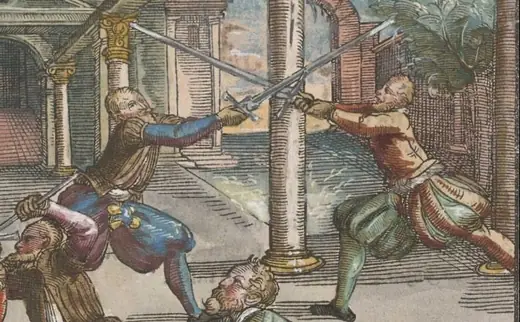
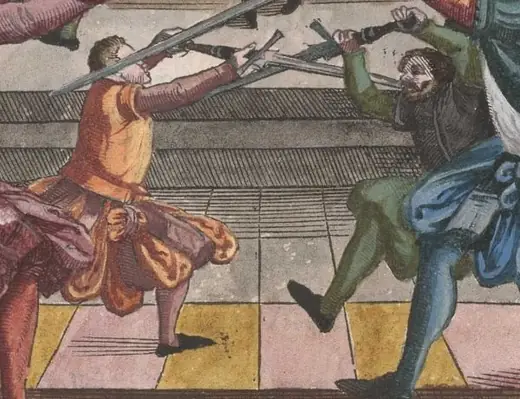
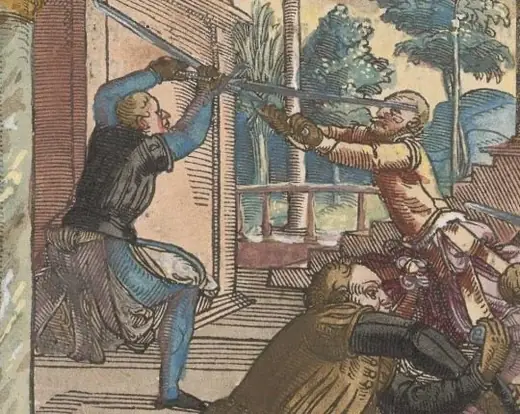
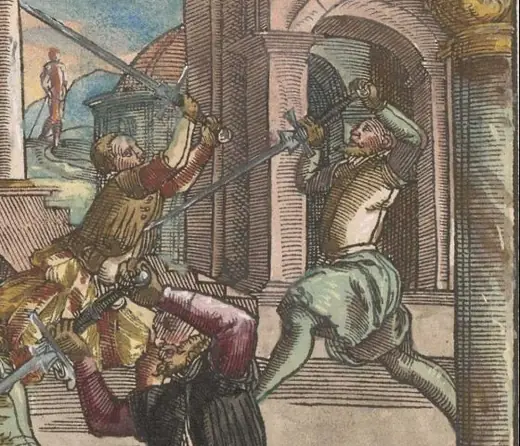
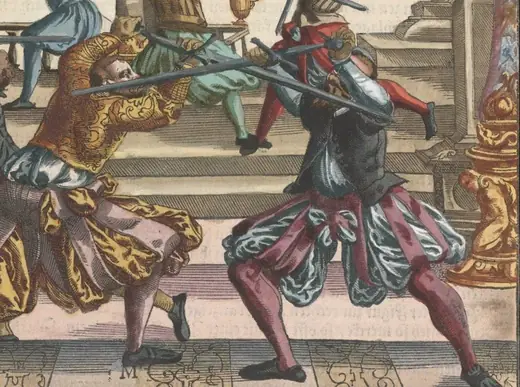
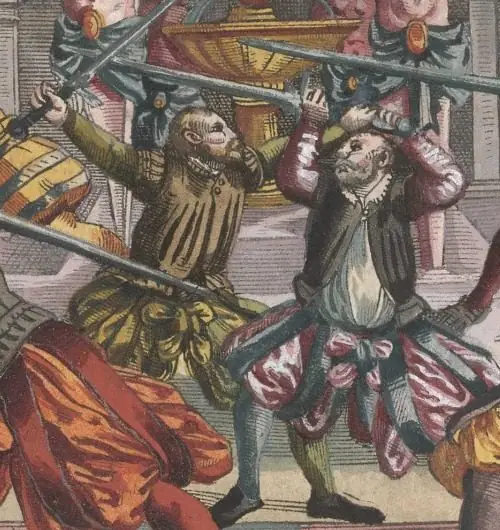
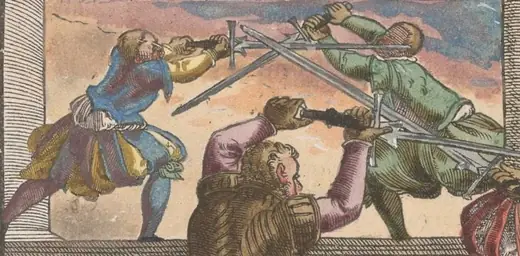
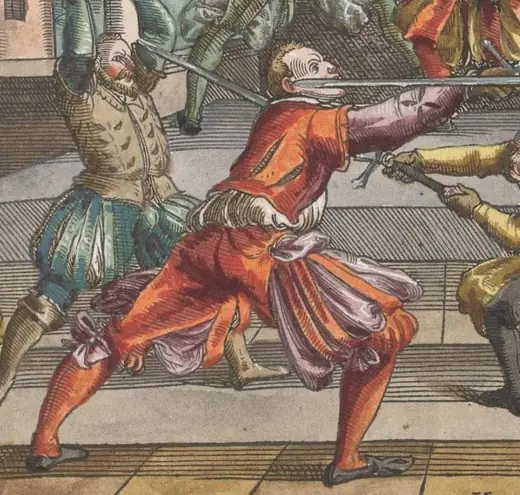
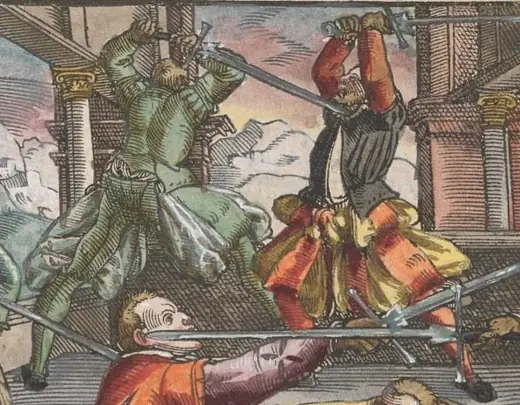
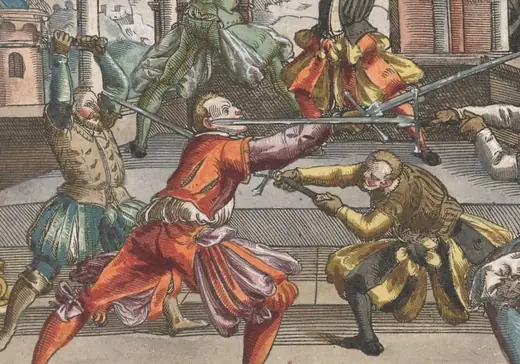
- The swords touching each other. One stays in two ways: waiting on the sword to see what the opponent will do, or feigning a withdrawal and coming back to the same place with the short edge. Fühlen is sensing whether he is hard or soft in the bind.
- Nachreisen
- A very good handwork. When the opponent strikes too high, too low or too wide, you chase after him into the opening and stop him from finishing his strike. The moment he lifts his sword, you cut beneath it.
- Schneiden
- The best obstacle when pressed with quick sequences. If he stays in the bind and goes around, go to his arm with the long edge, push with the strong or the ricasso and strike the nearest opening.
- Umschlagen
- Rising back from a bind on the right and striking or flicking to the other side.
- Ablaufen
- In the bind, turning the hand and letting the blade run down with the half edge, while pulling the hilt up for a new strike.
- Verführen
- Feigning a strike at one opening and hitting another. The Schielhau, Fehlen, Verfliegen, Winden, Zucken and Zirkel are its tools; body language is part of it too.
- Verfliegen
- If the opponent wants to meet your strike in the air, you pull the strike to another opening in mid-air without letting it touch his sword. Against those who fence at the sword, not at the body.
- Absetzen
- Not merely parrying a strike crosswise, but at the moment of contact stepping aside and striking an opening at the same time. If it comes from above, rise with the long edge, step to his left with your right foot, and when it clashes, flick the short edge to his head.
- Schlaudern
- From Alber, pulling the sword back from your right side and, stepping with the right foot, hurling the strike straight at his head like a stone from a sling.
- Zucken
- After binding with the long edge, pulling up quickly as if to strike the other side, but striking back with the short edge to where you started.
- Duplieren
- Doing a strike twice: first with the long edge from the right to the ear; when the swords clash, pushing the pommel under the right arm, lifting the arms and striking the head behind his blade with the short edge.
- Verkehren
- When bound on the left, pushing the pommel under the right arm, pulling the head to the right away from the strike, and pressing his blade or arm down with crossed hands so he cannot work.
- Umschnappen
- Holding his arm or blade under your crossguard with Verkehren and turning your blade to his head. Or, when pressed, giving way with the left foot, gripping over his right arm with the pommel and turning to his head with the short edge.
- Fehlen
- While striking at an opening, if the opponent wants to parry, letting the strike drop without touching and hitting another opening. Example: a Zornhau to the left ear; before it lands, lift the pommel, drop the blade to his left, pull it around your head and strike his head over his right arm.
- Zirkel
- If neither side gives an opening in the bind, cutting with the half edge and crossed hands from above beside his right. The right hand crosses strongly over the left so you can draw the half edge across his right ear.
- Rund (Ründe)
- Pulling the sword back with a single or double swing, circling over the head; also used to deceive.
- Winden
- Staying hard in the bind and turning the fore part of the blade inward toward the head and back out again. You always stay below and on his sword.
- Durchwinden
- After binding with a Zwerch and winding the short edge inside, passing to his right with your right foot, winding the hilt under his blade to the left, passing the pommel out over his right arm, pulling down and striking his head with the long edge.
- Wechsel
- It takes experience; done at the wrong time it opens you up for nothing. Suited against those who fence at the sword rather than the body. If he strikes at your sword, pass the point underneath with crossed hands and strike long to the other upper opening.
- Abschneiden
- With arms extended or waiting in Alber, cutting away long strikes from both sides with the long edge until you see your advantage. Liechtenauer: “Cut the hard ones from both directions.”
- Händedrücken
- Get under his strike with a Kronhau or Hängen, follow with your strong as he rises, and catch both his hands at once by falling from below in front of his fists with the ricasso. Push up and strike long.
- Verschieben
- Standing in right Zorn, letting the blade hang behind you and pushing it over your head under his blade. You catch the strike on the flat, thumb under the ricasso.
- Hängen
- Standing in Pflug, raising the hilt, letting the blade hang toward the ground and catching the strike on the flat. Then winding to the nearest opening.
- Außreißen
- When bound on the right, turning the sword and pulling it to his left, or entering between his arms with the pommel and wrenching up or down.
- Sperren
- Falling with the long edge on the blade of someone standing in Wechsel or Alber. When it clashes, crossing the hands and locking it so he cannot get free.
- Verstellen
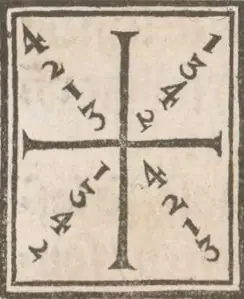
- Falling with a slice on the arms or sword of someone working quickly to the four openings, and not letting him rise again. Wherever he goes, you stay on his arm with the slice and restrict him.
- Übergreifen
- While cutting to the upper left opening, gripping over the crossguard or ricasso with the fingers, thumb staying on the grip. Lifting the pommel with the left hand and striking his head over or behind his parry with the hanging blade.
- Einlaufen
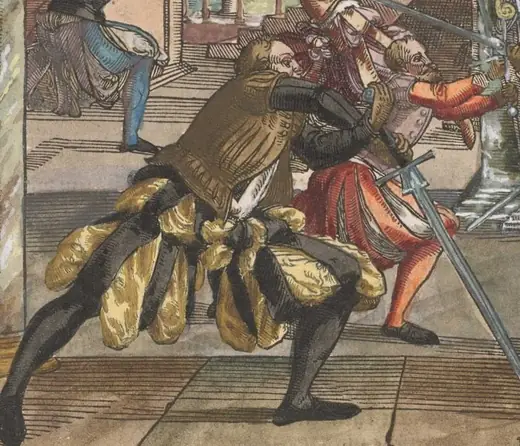
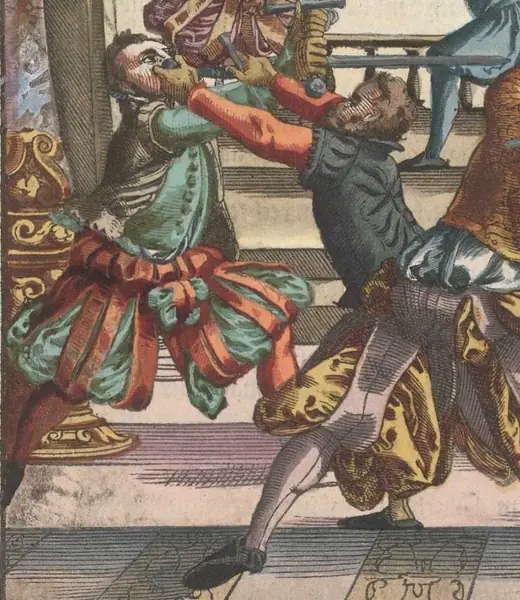
- Running in under his sword so that the swords touch. Because it relates to wrestling and throws, it is described in the plays.